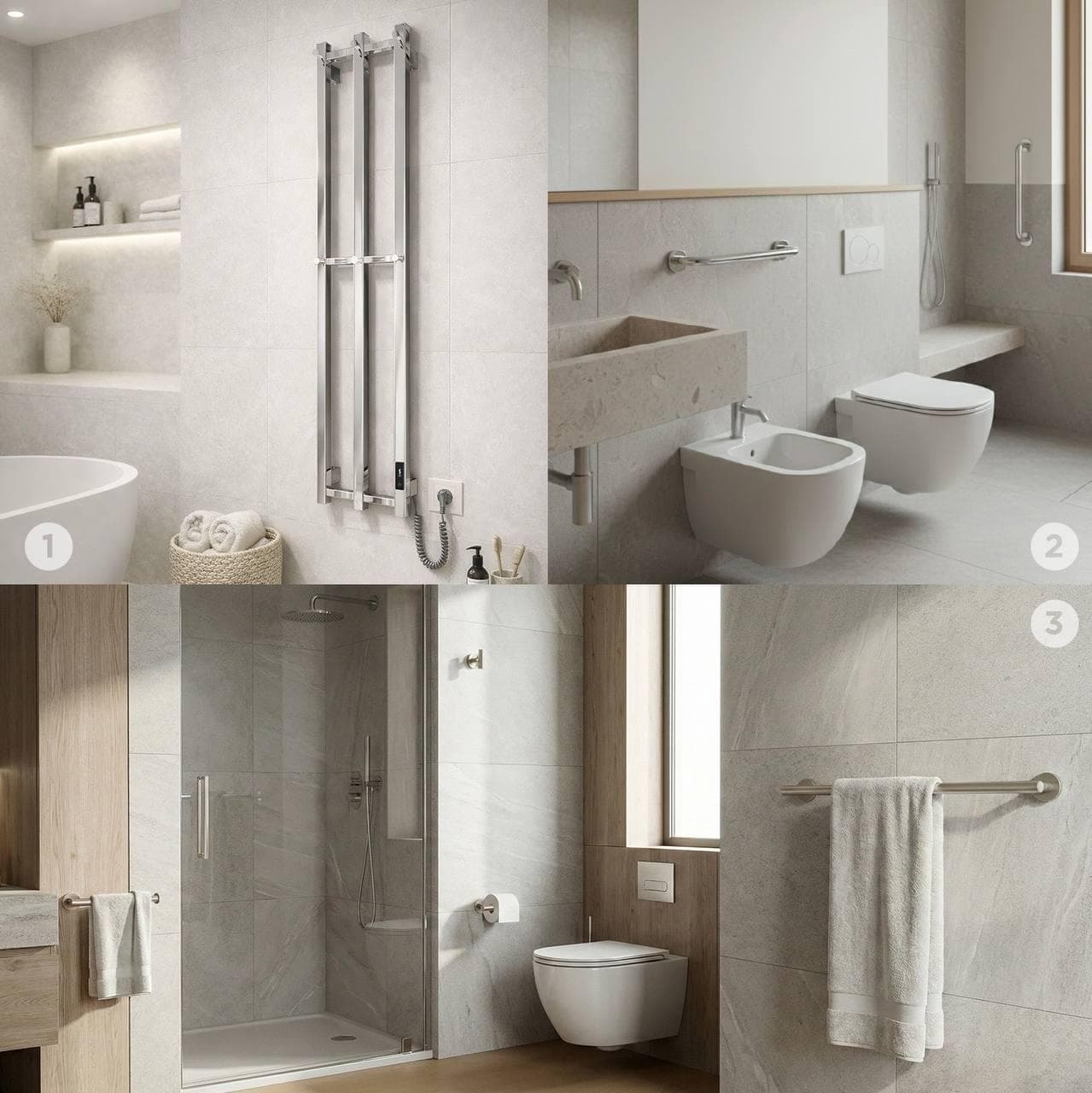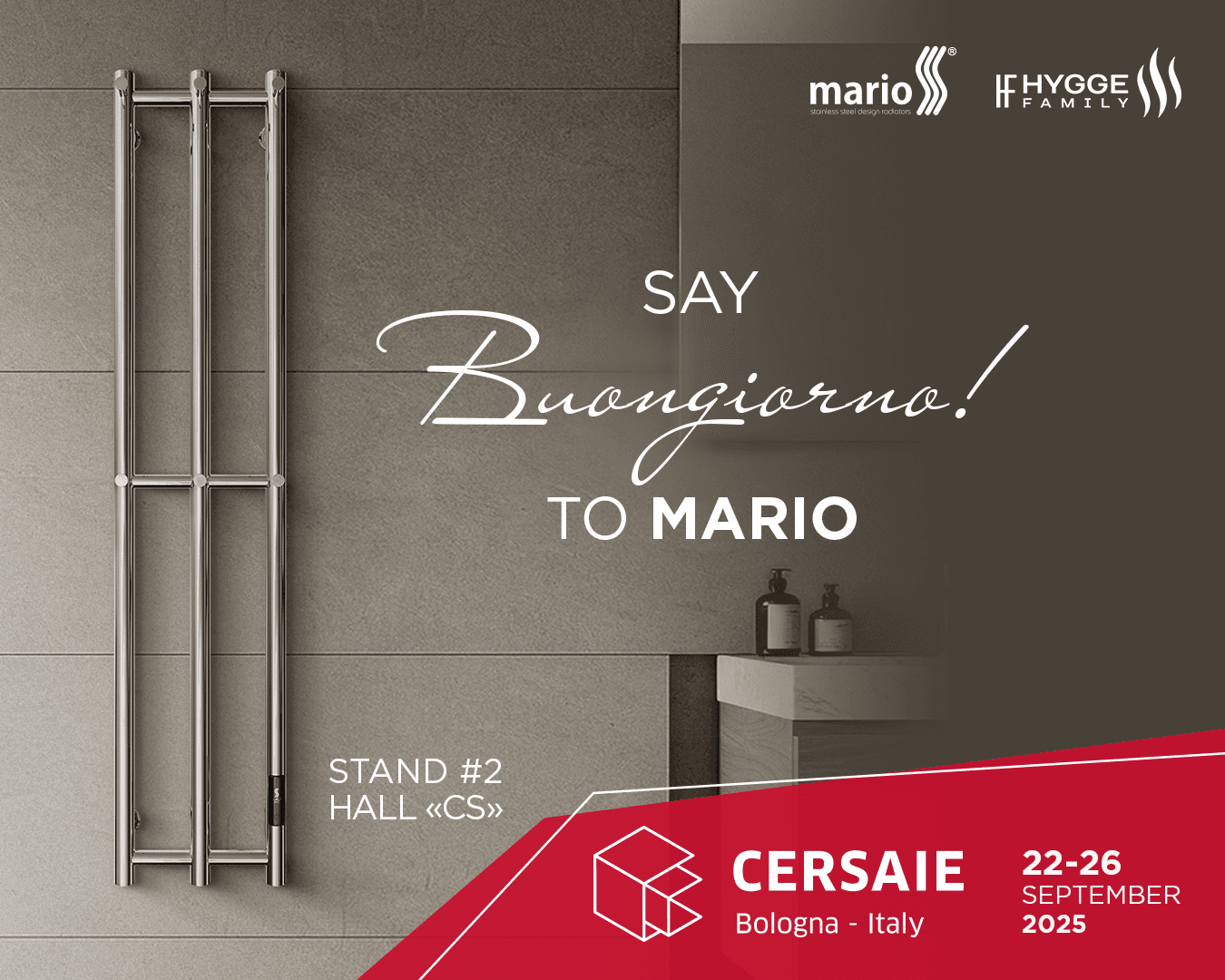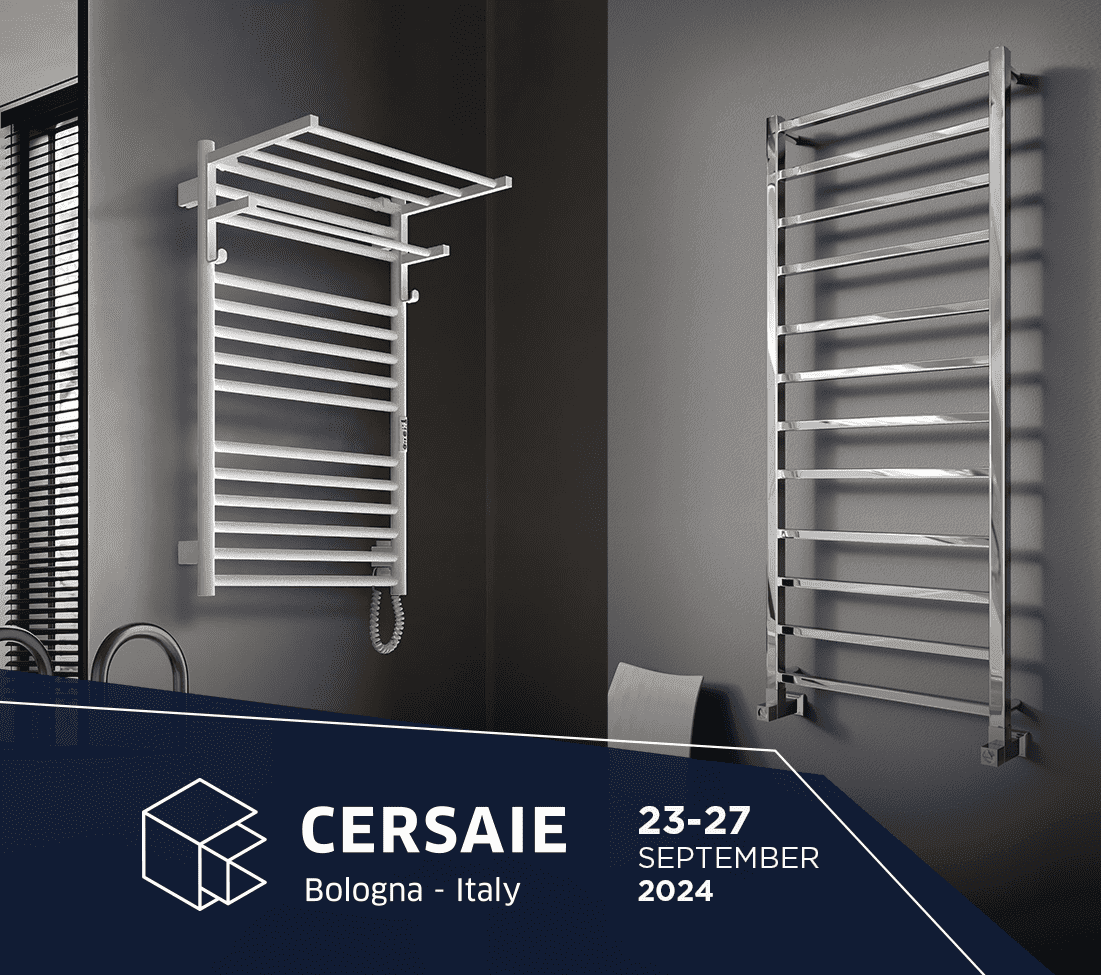
Two identical towel rails, one with a timer. We measured what the difference costs.
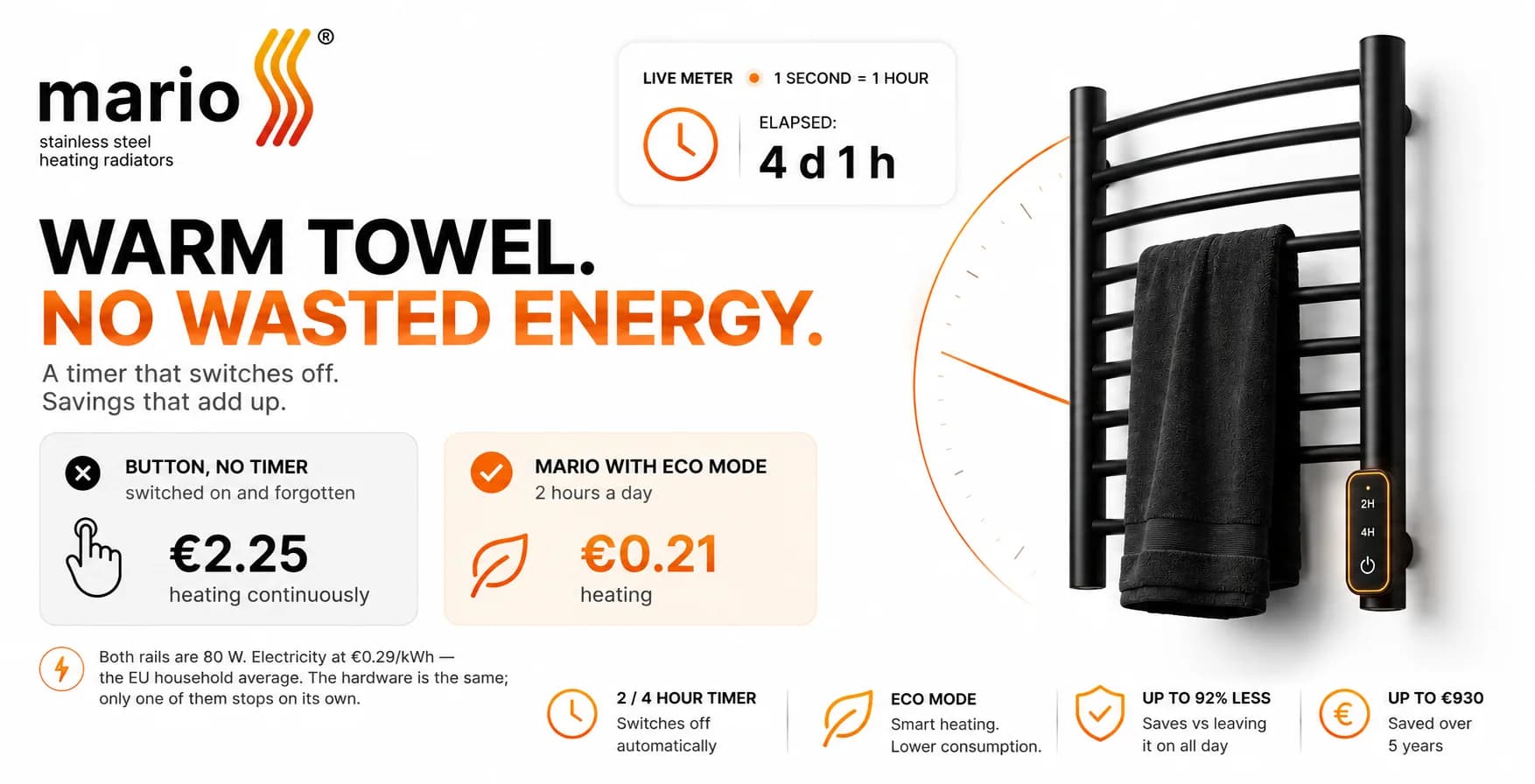
A heated towel rail gets switched on in the morning and switched off whenever someone remembers. Usually in the evening. Sometimes the next day. No spec sheet has a line for what that costs, so we worked it out.
We took two identical 80 W rails. The first is an ordinary on/off button: press it and it heats until you press it again. The second has a timer with 2- and 4-hour modes that shuts the rail down on its own. Then we multiplied watts by the electricity price. Over five years the difference is €930. Not a difference in what the rail costs — a difference in what a forgotten button costs.After 30 days of use
Difference: €15.31
Button, no timerswitched on and forgotten
€16.70
heating 24 hours a day
Mario with eco mode2 hours a day
€1.39
2 hours a day, then off
Both rails are 80 W. Electricity at €0.29/kWh — the EU household average. The hardware is the same; only one of them stops on its own.
What we measured
A warm towel costs five cents
The first objection to any electric towel rail is that it will quietly eat your electricity bill. Here is the exact answer, and you can check every figure against your own meter.
€0.05one 2-hour cycle
€0.09one 4-hour cycle — and that is the daily ceiling
€1.41per month, running it every single day
What a timer actually does
It doesn't save you from yourself. It saves you from being distracted.
If you reliably switch the rail off after four hours, a timer saves you nothing at all. Four hours are four hours. The saving begins at the point where somebody called, the kettle boiled, and you left the room.| Scenario | Hours/day | kWh/year | €/year |
|---|---|---|---|
| Mario, one 2-hour cycle | 2 | 58 | 17 |
| Mario, one 4-hour cycle | 4 | 117 | 34 |
| No timer, switched off on time | 4 | 117 | 34 |
| No timer, left on overnight | ~12 | 350 | 101 |
| No timer, never switched off | 24 | 701 | 203 |
- versus left on overnight — €85 a year, 83% less
- versus never switched off — €186 a year, 92% less
Five years of running cost
The rail is cheap. The habit is not.
Electricity only — no hardware prices, no assumptions about what you paid. This is purely what each behaviour costs to run, at the EU average tariff.Mario eco mode, 2 h a day€85
Mario eco mode, 4 h a day€169
No timer, left on overnight€507
No timer, never switched off€1,015
with a timer
without one
A rail with no automatic shut-off, left running the way people actually leave things running, will spend roughly twelve times its own eco-mode equivalent over five years — on heating an already-dry towel.
Across Europe
Where you live decides what a forgotten button costs
The same 80 W rail, left running around the clock for a year. Electricity prices differ across the EU by a factor of nearly four, so the same habit is a rounding error in one country and a real bill in another.| Country | €/kWh | Never off | Eco 2 h | You keep |
|---|---|---|---|---|
| Ireland | 0.404 | €283 | €24 | €260 |
| Germany | 0.387 | €271 | €23 | €249 |
| Belgium | 0.350 | €245 | €20 | €225 |
| Denmark | 0.331 | €232 | €19 | €213 |
| EU average | 0.290 | €203 | €17 | €186 |
| Bulgaria | 0.136 | €95 | €8 | €87 |
| Malta | 0.128 | €90 | €7 | €82 |
| Hungary | 0.108 | €76 | €6 | €70 |
Before you buy
Three questions to ask any electric towel rail
Not only ours. The answers decide what the rail will actually cost you over its life.- Does it switch itself off? Not whether the spec sheet says "timer" — what happens if you leave for three days. If it simply keeps heating, that is the largest running cost you will ever pay for it, and it is not printed on the price tag.
- What is its rated power in watts? That number is in the manual. Multiply kilowatts by your tariff by the hours you will realistically heat, and you have your own running cost in under a minute.
- Do you actually need an always-on mode? A towel dries in about 40 minutes; a small bathroom warms through in an hour. Everything the rail does after that, you are paying for without getting anything back.